Bike Battery Not Charging: Common Causes, Symptoms, Diagnosis & Solutions
A motorcycle battery is essential for starting the engine and supporting the bike's electrical system. When the battery is not charging properly, you may experience slow starting, dim headlights, a weak horn, repeated battery discharge or sudden electrical failure.
However, a battery that keeps going flat does not always mean the battery itself is faulty. The actual problem may be in the stator coil, regulator rectifier, charging fuse, wiring connections or another part of the electrical system.
Understanding the difference between a weak battery and a charging-system fault can help you avoid unnecessary battery replacement and repeated repair expenses. This guide explains the symptoms, causes, testing methods and practical solutions for motorcycle owners.
Understanding the Motorcycle Battery Charging System
A motorcycle charging system produces electrical power while the engine is running. This power operates electrical components and replenishes the energy used by the battery during starting.
Main Components of a Bike Charging System
1. Stator Coil: The stator generates alternating current (AC) as the engine rotates. It is one of the main sources of electrical power in many motorcycle charging systems.
2. Regulator Rectifier: This component converts AC into direct current (DC) and regulates the voltage supplied to the battery and electrical system.
3. Battery: The battery stores electrical energy and supplies power for starting and other electrical requirements.
4. Wiring and Connectors: The wiring harness, connectors, fuses and grounding points complete the charging circuit and carry electrical power between components.
How Does a Bike Battery Get Charged?
- The engine starts and rotates the alternator or stator assembly.
- The stator generates alternating electrical current.
- The regulator rectifier converts and regulates the electrical output.
- The regulated DC supply reaches the battery through the charging circuit.
- The battery stores energy for the next engine start and electrical use.
If any important component or connection in this process fails, the battery may not receive sufficient charging power.
Common Symptoms of a Bike Battery Not Charging
Charging problems often develop gradually. Identifying the early warning signs can help prevent a motorcycle from becoming completely unable to start.
1. Slow Engine Cranking
When you press the electric starter, the engine may turn slowly instead of starting normally. This can happen when the battery does not have enough stored energy.
2. Dim Headlights
Headlights may become noticeably dim, particularly when the engine is running or when other electrical components are being used.
3. Weak Horn
A weak or irregular horn can indicate low battery voltage or an electrical connection problem.
4. Repeated Battery Discharge
If the battery works after charging but becomes weak again after a short period, the charging system or an electrical leakage problem should be checked.
5. Starter Motor Stops Working
The electric starter may click without turning the engine, or it may stop responding because the battery voltage is too low.
6. Electrical Components Behave Irregularly
Dashboard lights, indicators or other electrical components may flicker or behave unusually when the electrical supply is unstable.
Why Is My Bike Battery Not Charging?
1. Faulty Regulator Rectifier
The regulator rectifier controls the charging voltage supplied to the battery. If it becomes faulty, it may cause undercharging or excessive charging voltage.
Common signs:
- Battery repeatedly becomes discharged.
- Charging voltage is outside the recommended range.
- Battery becomes unusually hot or shows signs of overcharging.
- Electrical components experience voltage-related problems.
Solution: Test the charging voltage and inspect the regulator rectifier connections. Replace the component only after confirming that it is faulty.
2. Damaged Stator Coil
The stator coil generates electrical power for the charging system. Burnt windings, damaged insulation or an internal electrical fault can reduce its output.
Common signs:
- Battery does not receive sufficient charging power.
- Charging voltage remains low.
- Stator wiring or connectors show signs of heat damage.
- Electrical problems continue even after battery charging.
Solution: A technician should inspect the stator connector, measure AC output and check winding resistance according to the motorcycle's service manual.
3. Loose or Corroded Battery Terminals
Battery terminals carry electrical current between the battery and motorcycle. Loose connections, corrosion or damaged terminal fittings can interrupt the electrical supply.
Common signs:
- Intermittent starting problems.
- Electrical components switch on and off unexpectedly.
- Visible corrosion around battery terminals.
- Loose battery cables.
Solution: Inspect the battery terminals, clean corrosion using an appropriate safe procedure and tighten the connections to the manufacturer's specification.
4. Weak or Damaged Battery
A battery may lose its ability to store electrical energy as it ages. Internal damage, prolonged discharge or an unsuitable charging method can also affect battery performance.
Common signs:
- Battery voltage drops quickly after charging.
- Starter motor turns slowly.
- Battery repeatedly fails a load test.
- Motorcycle struggles to start even when connections are secure.
Solution: Charge the battery using a compatible charger and arrange a battery condition or load test. Replace it if it fails the appropriate test.
5. Damaged Wiring or Charging Fuse
A damaged wire, loose connector, blown fuse or poor grounding point can interrupt the charging circuit.
Common signs:
- Charging stops intermittently.
- Visible damage to wiring insulation.
- Burnt or discoloured electrical connectors.
- A charging-system fuse repeatedly blows.
Solution: Inspect the fuse, connectors, wiring harness and ground connections. Never replace a fuse with a higher-rated fuse to stop it from blowing.
6. Electrical Leakage When the Bike Is Parked
Sometimes the charging system works correctly while riding, but the battery loses charge when the motorcycle is parked. This may be caused by an electrical accessory, faulty wiring or unwanted current draw.
Solution: A technician can perform a parasitic current leakage test and inspect accessories, wiring and electrical switches.
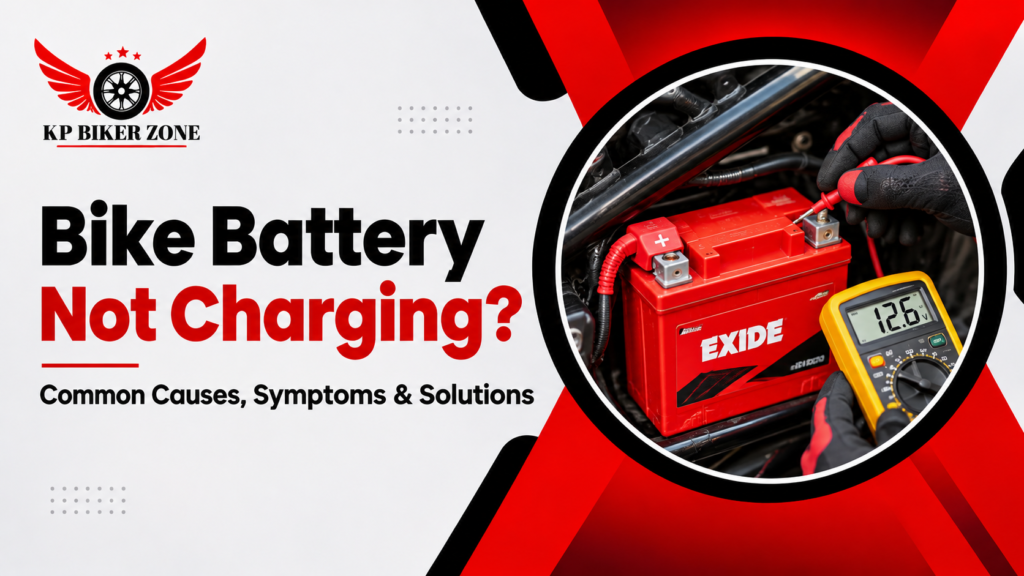
Bike Battery Voltage Testing Guide
A digital multimeter can help identify the condition of a battery and provide an initial indication of charging-system performance.
| Testing Condition | General Reference | Possible Meaning |
|---|---|---|
| 12V lead-acid battery at rest | Above 12.6V | Usually fully charged or near full charge |
| Battery at rest | 12.4V–12.5V | Partially discharged |
| Battery at rest | 12.0V–12.3V | Low state of charge |
| Battery at rest | Below 12.0V | Severely discharged or possibly weak |
| Engine running | Often around 13.0V–14.5V | Common reference range for many systems |
Important: These values are general reference points, not universal specifications. Charging voltage depends on the motorcycle model, battery chemistry, engine speed and manufacturer's design. Always use the service manual for the correct test conditions and limits.
How to Check Whether Your Bike Battery Is Charging
Step 1: Inspect the Battery
Check for physical damage, swelling, leakage or corrosion. Do not use a damaged or leaking battery.
Step 2: Check the Battery Voltage
With the motorcycle switched off, use a suitable digital multimeter to measure voltage directly across the battery terminals. Follow the correct polarity.
Step 3: Start the Motorcycle
Start the engine and measure the battery voltage again. Keep the probes secure and away from moving, hot or exposed parts.
Step 4: Compare the Readings
Compare the voltage readings with the manufacturer's specified charging range at the specified engine speed. A reading that does not increase as expected may indicate a charging-system issue.
Step 5: Inspect the Charging Circuit
If the readings are abnormal, the stator output, regulator rectifier, fuses, connectors and wiring may require further testing.
Safety warning: If you are unfamiliar with electrical testing, let a trained technician perform these checks. Never short battery terminals, reverse battery polarity or disconnect the battery while the engine is running.
Battery Problem vs Charging System Problem
| Observed Problem | Possible Cause | Recommended Test |
|---|---|---|
| Battery drains repeatedly | Charging fault or current leakage | Charging and leakage test |
| Bike starts slowly | Weak battery or poor connection | Load test and terminal inspection |
| Lights become dim | Low voltage or charging fault | Charging voltage test |
| Battery becomes unusually hot | Possible overcharging or battery fault | Charging-system inspection |
| Battery does not charge | Stator, regulator, fuse or wiring fault | Complete charging circuit test |
| Battery loses charge while parked | Electrical leakage or accessory drain | Parasitic current test |
What Should You Check Before Replacing a Bike Battery?
Replacing a battery without identifying the original problem may lead to repeated expenses. Before installing a new battery, consider these checks:
- Confirm that the battery is suitable for the motorcycle.
- Check battery condition using an appropriate tester.
- Measure charging voltage under the specified test conditions.
- Inspect stator coil output and wiring connections.
- Check the regulator rectifier and charging fuse.
- Inspect for current leakage when the motorcycle is switched off.
A correct diagnosis helps determine whether the battery needs replacement or another electrical component needs repair.
How to Prevent Bike Battery Charging Problems
Regular inspection and correct battery maintenance can help reduce unexpected starting and charging problems.
- Check battery terminals and wiring connections periodically.
- Keep the battery area clean and dry.
- Use a battery compatible with your motorcycle model.
- Avoid leaving electrical accessories switched on unnecessarily.
- Get repeated starting problems inspected early.
- Use a compatible battery charger when charging is required.
- Follow the recommended maintenance schedule in your owner's manual.
- Get additional electrical accessories installed correctly.
Does Frequent Short-Distance Riding Affect Battery Charging?
Frequent short rides can sometimes leave the battery with less charge than expected. Starting the engine uses electrical energy, and a short journey may not provide enough time for the charging system to replenish it fully.
If the motorcycle is used mainly for short trips, monitor battery condition and follow the battery manufacturer's charging recommendations. Repeated discharge should still be investigated rather than assumed to be normal.
When Should You Get Professional Bike Battery Assistance?
Professional inspection is recommended when:
- Your motorcycle repeatedly fails to start.
- The battery becomes discharged soon after charging.
- Charging voltage is outside the manufacturer's specification.
- There are burnt connectors or damaged electrical wires.
- The battery becomes unusually hot or shows physical damage.
- A charging-system fuse repeatedly blows.
Do not continue riding if you notice smoke, burning smells, melted wiring or a severely overheating battery. Switch off the motorcycle when safe and arrange professional assistance.
Bike Battery Assistance in Pune & PCMC
If your motorcycle has a starting problem or a discharged battery in Pune or Pimpri-Chinchwad, KP BikerZone provides doorstep bike assistance and emergency roadside support in its service areas.
If your bike is not starting because of a discharged battery, explore our Bike Battery Jump Start Services for service details.
You can also check the Bike Service Price List to understand the available service plans and pricing.
Frequently Asked Questions
1. Why is my bike battery not charging?
A bike battery may not charge because of a faulty regulator rectifier, damaged stator coil, loose battery terminals, corroded wiring, a blown fuse or an internally damaged battery. A complete charging-system test helps identify the actual cause.
2. How do I know if my bike battery is weak?
Common signs include slow engine cranking, dim headlights, a weak horn and difficulty starting the motorcycle. A battery voltage test and load test can help confirm its condition.
3. Can I ride my bike with a faulty charging system?
It is not recommended. The battery may continue losing charge while riding, which can eventually cause electrical problems or prevent the motorcycle from restarting. Get the charging system inspected.
4. How much voltage should a bike battery show while charging?
Many 12V motorcycle charging systems operate around 13.0V to 14.5V under suitable test conditions. The correct charging range and engine speed must be confirmed using the manufacturer's service manual.
5. Can a faulty regulator rectifier damage a bike battery?
Yes. A faulty regulator rectifier may cause undercharging or overcharging. Excessive voltage can damage the battery and other electrical components, while insufficient charging can leave the battery discharged.
6. Can a bike battery be repaired instead of replaced?
Some problems may be resolved by correcting loose connections or charging-system faults. However, an internally damaged or worn-out battery generally needs replacement after proper testing.
7. Why does my bike battery keep dying even after charging?
Possible reasons include a faulty stator coil, regulator rectifier, electrical leakage, damaged wiring or a battery that cannot hold charge. The battery and charging system should both be tested.
8. Can a bike battery charge while the engine is idling?
Some motorcycles produce limited charging output at idle, while others need higher engine speed to charge effectively. The result depends on the motorcycle's charging-system design and electrical load.
9. Does a new bike battery need charging?
It depends on the battery type and its initial charge condition. Follow the manufacturer's instructions and check its voltage before installation. Use only a compatible charger.
10. Does KP BikerZone provide bike battery jump-start assistance in Pune?
Yes. KP BikerZone provides bike battery jump-start assistance in its Pune and PCMC service areas, subject to technician availability and location. Visit the Bike Battery Jump Start Service page for details.
Connect with KP BikerZone
Follow KP BikerZone on Instagram and Facebook for bike maintenance tips, service update