Signs of a Worn-Out Bike Clutch Plate: Symptoms & Replacement Guide
Is your bike engine revving, but the motorcycle is not accelerating properly? Do you notice a burning smell, reduced pickup or difficulty changing gears? These symptoms may indicate a worn-out bike clutch plate or a problem with the clutch adjustment system.
The clutch is an important part of a motorcycle's transmission system. It connects and disconnects engine power from the gearbox, allowing you to start, stop and change gears smoothly. When the clutch does not engage properly, riding performance, fuel efficiency and control can be affected.
In this guide, you will learn the common signs of a worn bike clutch plate, why clutch problems occur, how a mechanic checks the clutch and when replacement may be necessary.
What Is a Bike Clutch Plate and How Does It Work?
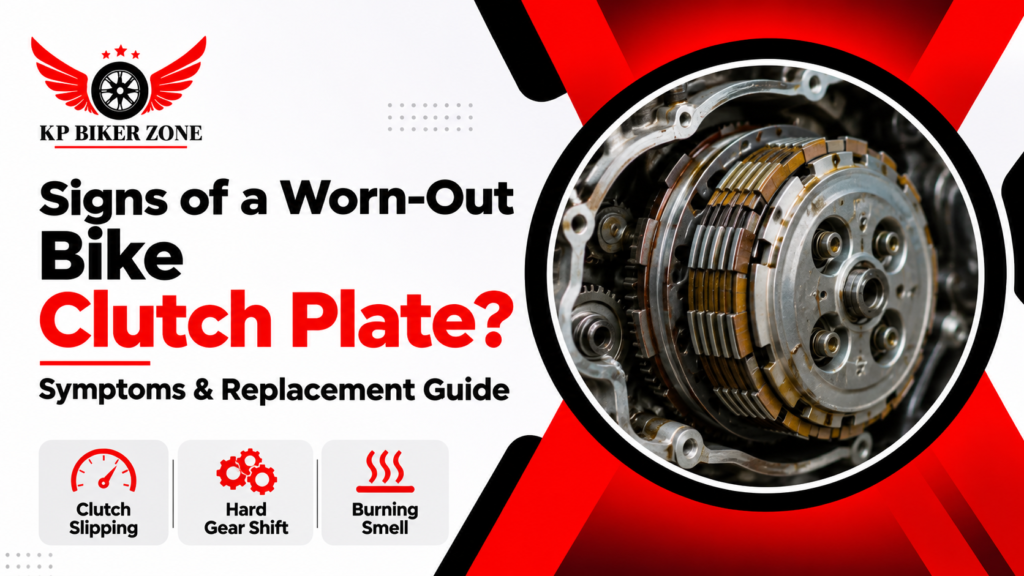
A motorcycle clutch transfers engine power to the gearbox. In many motorcycles, a wet multi-plate clutch is used. It contains several friction plates and steel plates arranged in a clutch assembly, usually operating in engine oil.
When you pull the clutch lever, the clutch mechanism separates the plates so engine power is temporarily disconnected from the gearbox. When you release the lever, the plates engage again and transfer power to the transmission.
The clutch controls how engine power is transferred to the gearbox and rear wheel.
7 Signs of a Worn-Out Bike Clutch Plate
1. Engine RPM Increases but Bike Speed Does Not
One of the most common symptoms of clutch slipping is when the engine RPM rises but the motorcycle does not gain speed proportionately.
For example, you accelerate in a higher gear and hear the engine revving more than usual, but the bike feels slow or struggles to pick up speed. This may happen because the clutch plates are not gripping properly and engine power is not being transferred efficiently.
Possible cause: Worn friction plates, weak clutch springs, incorrect clutch adjustment or unsuitable engine oil.
2. Burning Smell While Riding
A burning smell during acceleration, heavy traffic riding or uphill climbing may indicate excessive clutch slipping. When the clutch plates keep slipping against each other, friction generates heat.
Repeated overheating can damage the friction material and affect clutch performance. However, a burning smell can also come from other components, so the actual source should be checked.
Possible cause: Excessive clutch slipping, prolonged partial clutch engagement or a mechanical clutch problem.
3. Poor Pickup and Reduced Acceleration
If your bike previously accelerated smoothly but now feels weak, the clutch system may not be transferring engine power properly. You may notice the problem more clearly while carrying a passenger, climbing a slope or accelerating in higher gears.
Possible cause: Worn friction plates, weak clutch springs or incorrect clutch cable adjustment. Engine and fuel-system problems can also cause poor pickup.
4. Difficulty Changing Gears
If gear changes become unusually difficult, the clutch may not be disengaging completely when you pull the lever. This can make gear shifting rough and may cause the motorcycle to feel as though it is still trying to move even when the clutch lever is pulled.
Possible cause: Incorrect clutch cable free play, a sticking clutch mechanism, warped plates or another gearbox-related issue.
5. Bike Moves Forward Even When Clutch Is Fully Pulled
If the motorcycle tries to move forward while it is in gear and the clutch lever is fully pulled, the clutch may be dragging instead of disengaging completely.
This is different from clutch slipping. Clutch drag means the clutch is not separating properly, while clutch slipping means it is not gripping properly when engaged.
Possible cause: Incorrect cable adjustment, clutch plate distortion, sticking plates or an internal clutch mechanism problem.
6. Clutch Lever Feels Unusually Hard or Loose
A clutch lever that suddenly feels too hard, too loose or inconsistent may indicate an adjustment or mechanical issue. A damaged cable, lack of lubrication in a serviceable cable system or a problem with the clutch release mechanism can affect lever operation.
Possible cause: Clutch cable wear, incorrect free play, damaged components or a problem in the release mechanism.
7. Unusual Noise From the Clutch Area
Rattling, knocking or unusual mechanical noise around the clutch area may indicate a problem with the clutch basket, bearing, plates or related components. Noise that changes when you pull or release the clutch lever should be inspected.
Possible cause: Worn clutch components, loose parts, bearing wear or another engine or transmission issue.
Common Symptoms and Possible Clutch Problems
| Symptom | Possible Problem | Recommended Inspection |
|---|---|---|
| Engine RPM rises but speed does not | Clutch slipping | Friction plates and springs |
| Burning smell | Excessive clutch friction | Clutch assembly and riding-related wear |
| Poor acceleration | Clutch or engine performance issue | Clutch and engine inspection |
| Hard gear shifting | Clutch not disengaging properly | Free play and clutch mechanism |
| Bike moves with lever pulled | Clutch drag | Plate separation and adjustment |
| Hard or loose clutch lever | Cable or release mechanism issue | Cable and lever inspection |
| Noise near clutch area | Possible component wear | Clutch assembly inspection |
These symptoms are clues, not confirmation that the clutch plates must be replaced. A proper inspection is required.
Clutch Slipping vs Clutch Dragging: What Is the Difference?
Clutch slipping and clutch dragging are two different problems. Understanding the difference helps describe the symptoms accurately.
Both conditions can affect acceleration, gear shifting and riding comfort, but they need different checks.
| Clutch Slipping | Clutch Dragging |
|---|---|
| Engine RPM rises without matching speed increase. | Bike may try to move even when the clutch lever is pulled. |
| Power transfer becomes inefficient. | Clutch does not separate completely. |
| May cause heat and burning smell. | May cause difficult gear changes or rough engagement. |
| May involve worn friction plates or weak springs. | May involve incorrect free play, sticking or warped plates. |
What Causes Bike Clutch Plates to Wear Out?
Clutch plates gradually wear through normal use. However, certain riding habits, maintenance issues and mechanical faults can increase wear and reduce clutch life.
1. Riding With the Clutch Half-Engaged
Keeping the clutch lever partially pulled for long periods can create unnecessary friction and heat. This is especially common in slow-moving traffic and while riding at low speeds.
2. Holding the Bike on a Slope Using the Clutch
Using the clutch to keep the motorcycle stationary on an incline can cause continuous friction. Use the brakes to hold the bike instead of balancing it with the clutch.
3. Aggressive Acceleration
Repeated hard acceleration, sudden clutch release and high-load riding can increase stress on the clutch assembly.
4. Incorrect Engine Oil
Many motorcycles use a wet clutch that shares engine oil with the clutch assembly. Oil that does not meet the manufacturer's specification may affect clutch performance. Use the recommended oil grade and specification for your motorcycle.
5. Incorrect Clutch Cable Adjustment
Insufficient free play can prevent the clutch from fully engaging. Excessive free play can prevent complete disengagement. Both conditions may affect operation and should be adjusted according to the manufacturer's specification.
6. Normal Wear Over Time
Friction material gradually wears as the clutch is used. Riding conditions, maintenance, motorcycle design and usage determine how quickly the clutch components wear.
How Does a Mechanic Check a Bike Clutch Plate?
A mechanic should identify the actual cause before recommending clutch plate replacement. Not every clutch-related symptom means that the friction plates are worn out.
Important Inspection Points
- Clutch lever free play: Check whether the lever has the correct free movement as specified by the manufacturer.
- Clutch cable condition: Inspect for fraying, damage, sticking or incorrect adjustment.
- Friction plate thickness: Compare the plate thickness with the service limit specified for the motorcycle.
- Steel plate condition: Check for warping, heat damage or unusual surface marks.
- Clutch springs: Inspect spring condition and length against manufacturer specifications.
- Clutch basket: Check for excessive wear or damage that may affect smooth clutch operation.
- Engine oil: Confirm that the oil type, grade and level are suitable for the motorcycle.
When Should You Replace a Bike Clutch Plate?
Clutch plate replacement may be necessary when the friction plates are below the manufacturer's service limit, badly worn, damaged or unable to transfer engine power properly. The mechanic should also inspect the steel plates, springs and clutch basket before completing the repair.
Depending on the motorcycle model and condition, the repair may involve replacing friction plates, steel plates, clutch springs or other components. Sometimes a cable adjustment or oil correction may solve the problem without replacing the clutch plates.
| Component | When It May Need Attention |
|---|---|
| Friction plates | Below service limit, worn or damaged |
| Steel plates | Warped, heat-damaged or outside specification |
| Clutch springs | Weak, damaged or outside specified length |
| Clutch cable | Frayed, sticking or damaged |
| Clutch basket | Excessive wear or damaged contact surfaces |
How to Increase the Life of Your Bike Clutch Plate
Good riding habits and regular maintenance can help reduce unnecessary clutch wear. Follow these practical tips to maintain smoother clutch operation.
- Release the clutch lever fully when riding in a suitable gear.
- Avoid keeping your fingers on the clutch lever unnecessarily.
- Do not hold the motorcycle on a slope using the clutch.
- Use the brakes to keep the bike stationary in traffic.
- Use the engine oil grade and specification recommended by the manufacturer.
- Get clutch cable free play checked during regular servicing.
- Avoid unnecessary aggressive acceleration and prolonged clutch slipping.
- Get unusual clutch noise, burning smell or slipping checked early.
Does Every Bike Need Clutch Plate Replacement at the Same Time?
No. Clutch plate life varies according to the motorcycle model, riding style, traffic conditions, maintenance and load. A bike used frequently in stop-and-go traffic may experience different clutch wear from a motorcycle mainly used on open roads.
There is no single replacement kilometre that applies to every motorcycle. Follow the service schedule in the owner's manual and replace components only when inspection shows that they are worn or outside the manufacturer's limits.
Doorstep Bike Service and Clutch Inspection in Pune
Clutch-related symptoms should be checked before they affect the motorcycle's performance further. KP BikerZone provides doorstep bike service and repair support in Pune and Pimpri-Chinchwad. Depending on the motorcycle model and the nature of the problem, the mechanic can inspect accessible clutch controls, cable adjustment and related components, and advise whether workshop-level clutch assembly work is required.
For general service information, visit our doorstep bike service in Pune page or check our bike service price details. You can also explore the bike models and service information available on our website.
For service enquiries, call +91 8263805949 or send your bike model and location on WhatsApp. You can also see service updates on Instagram and Facebook.
Frequently Asked Questions
1. How do I know if my bike clutch plate is worn out?
Common signs include engine RPM increasing without a matching speed increase, poor acceleration, a burning smell and clutch slipping. A mechanic should inspect the clutch system to confirm the cause.
2. Can a worn clutch plate reduce bike mileage?
Clutch slipping can waste engine power and may affect fuel efficiency, especially when the engine revs without transferring power effectively to the rear wheel.
3. Why does my bike RPM increase but speed does not?
This is a common sign of clutch slipping. Worn friction plates, weak springs, incorrect adjustment or unsuitable oil may contribute to the problem.
4. Can incorrect engine oil cause clutch slipping?
Yes, using oil that does not meet the motorcycle manufacturer's specification may affect wet clutch performance. Always use the recommended oil grade and specification.
5. How long does a bike clutch plate last?
Clutch life depends on the motorcycle, riding style, traffic conditions, load and maintenance. There is no fixed kilometre limit that applies to every bike.
6. Can clutch cable adjustment solve clutch problems?
Sometimes. Incorrect cable free play can cause slipping or incomplete disengagement. Correct adjustment may solve the issue if the plates and other components are still in good condition.
7. Is it safe to ride with a slipping clutch?
Riding with a slipping clutch can increase heat and damage clutch components. If slipping is severe or acceleration becomes unreliable, stop riding and arrange an inspection.
8. Why does my bike have a burning smell when accelerating?
Excessive clutch slipping can generate heat and cause a burning smell. Other sources are possible too, so the clutch and nearby components should be inspected.
9. Should I replace all clutch plates together?
It depends on the clutch design and inspection results. The mechanic should check friction plates, steel plates and springs against the