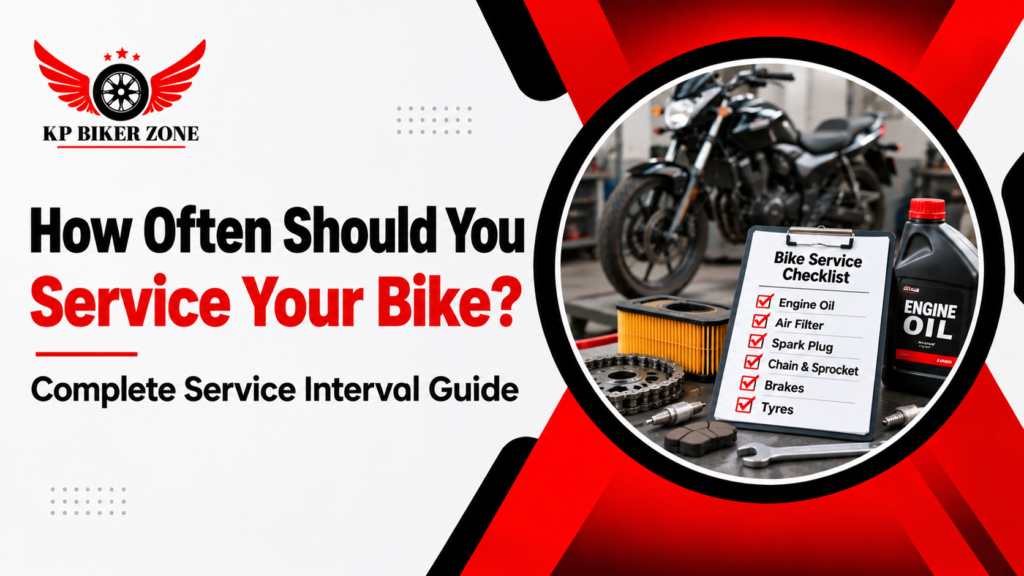
How Often Should You Service Your Bike? Complete Service Interval Guide
Regular bike servicing is important for maintaining engine performance, smooth riding and road safety. Whether you use your motorcycle for daily office travel, short city rides or long-distance journeys, timely maintenance helps identify problems before they become expensive repairs.
But how often should you service your bike? Should you follow a fixed kilometre interval, or should you get it serviced after a certain number of months? The answer depends on your bike model, manufacturer recommendations, engine oil specification, riding conditions and daily usage.
In this complete bike service interval guide, we explain when to service your motorcycle, which parts need regular inspection, how riding conditions affect maintenance and what signs indicate that your bike needs attention.
1. How Often Should You Service Your Bike?
Most motorcycles require periodic maintenance based on kilometres travelled or time elapsed, whichever comes first according to the manufacturer's schedule. Even if you ride your bike occasionally, certain components still need time-based inspection.
A motorcycle used every day in heavy traffic may need more frequent inspections than a bike used only for occasional weekend rides. However, the official service schedule should always remain your primary reference.
- New motorcycle: Complete the first service and subsequent free services within the specified kilometre and time limits.
- Daily-use motorcycle: Follow the regular service schedule and inspect wear-prone parts frequently.
- Occasionally used motorcycle: Do not ignore time-based maintenance just because the odometer reading is low.
- High-usage motorcycle: Pay extra attention to the chain, brakes, tyres, air filter and engine oil condition.
2. Bike Service Interval Based on Kilometres
Many motorcycle owners use the odometer reading to decide when their next service is due. However, there is no single kilometre interval that applies to every motorcycle. Different manufacturers specify different schedules depending on engine design, model and maintenance requirements.
Use the following table as a general planning checklist, not as a universal service schedule.
| Usage or Service Stage | What to Do | Important Note |
|---|---|---|
| First service | Complete the initial inspection and scheduled maintenance | Follow the exact new-bike schedule |
| Regular service interval | Inspect and maintain engine oil, brakes, chain and other components | Use the model-specific kilometre interval |
| Between scheduled services | Check tyres, lights, brakes, chain and oil level | Basic checks can be done more frequently |
| After demanding riding | Inspect parts affected by dust, rain, traffic or rough roads | Additional inspection may be necessary |
| After a long period without use | Check battery, tyres, fluids, brakes and visible leaks | Time-based maintenance still matters |
Do not wait for a particular kilometre reading if your motorcycle develops an unusual noise, oil leak, starting problem or braking issue. Such problems may require inspection before the next scheduled service.
3. Does Time Also Matter in Bike Servicing?
Yes. Bike maintenance is not based only on kilometres. Engine oil, brake fluid, coolant on applicable models, rubber components and the battery can require attention even when the motorcycle is not used frequently.
A bike parked for several months may develop battery problems, tyre pressure loss, chain corrosion or other issues. Therefore, always check both the distance-based and time-based recommendations in your owner's manual.
Why Time-Based Maintenance Is Important
- Engine oil can age and may require replacement according to the specified time limit.
- Brake fluid can absorb moisture over time and needs replacement as recommended.
- Battery condition may deteriorate during long periods of inactivity.
- Tyres can lose pressure and develop age-related deterioration.
- Exposed metal parts and chains may develop rust due to moisture.
4. Important Bike Parts That Need Regular Maintenance
A proper bike service is more than just changing engine oil. Several components need inspection, cleaning, adjustment or replacement depending on their condition and the manufacturer's maintenance schedule.
| Bike Component | Maintenance Required | Why It Is Important |
|---|---|---|
| Engine oil | Check level and replace as scheduled | Helps protect moving engine components |
| Air filter | Inspect, clean or replace as specified | Maintains proper airflow |
| Spark plug | Inspect and replace when required | Supports reliable ignition |
| Drive chain | Check slack, clean and lubricate | Helps maintain smooth power transmission |
| Brake pads or shoes | Inspect wear and braking operation | Important for safe stopping |
| Tyres | Check pressure, tread and damage | Supports grip and handling |
| Battery | Check terminals and starting performance | Helps prevent starting problems |
| Clutch | Check free play and operation | Supports smooth gear changes |
| Lights and indicators | Check electrical operation | Improves visibility and safety |
5. When Should You Change Bike Engine Oil?
Engine oil is one of the most important maintenance items in a motorcycle. It lubricates moving components, helps reduce friction and carries heat away from engine parts.
Over time, engine oil can lose its protective properties and become contaminated. This is why it needs to be changed according to the manufacturer's recommended interval and oil specification.
Signs That Your Engine Oil Needs Attention
- Engine oil has reached the replacement interval mentioned in the owner's manual.
- The oil level is below the recommended mark.
- You notice fresh oil leakage around the engine.
- The engine develops unusual noise or feels different during operation.
- The motorcycle has been used in demanding conditions and needs an additional oil-level inspection.
Always use the correct oil grade and specification recommended for your motorcycle. Avoid overfilling or using an unsuitable oil type.
For more information about available maintenance support, visit the doorstep bike service in Pune page.
6. How Riding Conditions Affect Bike Service Intervals
Your riding environment can affect how quickly certain motorcycle components wear out. A bike used in heavy traffic may experience different maintenance demands compared with one used mainly on open roads.
Daily City Riding
Frequent traffic, repeated braking, idling and short trips can increase maintenance demands. Regularly inspect the brakes, chain, tyres and engine oil level.
Long-Distance Riding
Before a long journey, check tyre pressure, brakes, chain condition, lights and fluid levels. After the ride, inspect the motorcycle for unusual sounds, leaks or damage.
Dusty and Rough Roads
Dust can affect the air filter and exposed moving parts. Inspect the air filter and drive chain more frequently when riding in dusty conditions.
Rainy and Wet Conditions
Water and moisture can affect the chain, brakes and exposed metal components. Clean and lubricate the chain as recommended and check braking performance after heavy rain exposure.
7. Monthly Bike Maintenance Checklist
You do not have to wait for a scheduled service to check basic motorcycle components. A simple monthly inspection can help you identify visible problems early.
- Check tyre pressure according to the recommended values.
- Inspect tyre tread, cuts and unusual wear.
- Check engine oil level using the method mentioned in the owner's manual.
- Inspect the chain for incorrect slack, rust or dryness.
- Check front and rear brake operation.
- Test the headlight, tail light, indicators and horn.
- Look for visible engine oil or fluid leaks.
- Check whether the battery starts the motorcycle reliably.
- Listen for unusual engine or chain noise.
8. Signs Your Bike Needs Servicing Before the Next Due Date
Sometimes a motorcycle develops a problem before its next scheduled service. Do not ignore unusual changes in performance or handling just because the service date has not arrived.
- Hard starting: The engine takes longer than usual to start.
- Poor pickup: Acceleration feels weaker than normal.
- Unusual vibration: The handlebar, footpegs or motorcycle vibrate more than usual.
- Engine noise: New knocking, rattling or other mechanical sounds appear.
- Oil leakage: Fresh oil marks appear around the engine or underneath the motorcycle.
- Brake problems: Braking becomes weak, noisy or inconsistent.
- Chain noise: The chain makes unusual sounds or has incorrect slack.
- Warning lights: A dashboard warning light stays on unexpectedly.
Some of these symptoms may indicate safety-related faults. Avoid riding if the brakes are not working correctly, there is a serious fuel leak, the engine is overheating or the motorcycle feels unsafe. Arrange an inspection instead.
9. What Happens If You Delay Bike Servicing?
Delaying regular maintenance can allow minor issues to develop into larger mechanical problems. The result depends on which component is neglected and how the motorcycle is used.
| Delayed Maintenance | Possible Problem |
|---|---|
| Engine oil replacement | Reduced lubrication protection and increased engine wear |
| Air filter inspection | Restricted airflow and possible performance issues |
| Chain cleaning and lubrication | Increased chain and sprocket wear |
| Brake inspection | Reduced braking performance and safety risk |
| Tyre inspection | Reduced grip or tyre-related problems |
| Battery inspection | Unexpected starting difficulties |
| Fluid inspection | Possible loss of performance or component protection |
Regular servicing does not mean replacing every part at every visit. Components should be inspected and replaced when required by the service schedule or their actual condition.
10. General Bike Service vs Repair: What Is the Difference?
Many bike owners assume that every problem can be solved through a general service. However, scheduled maintenance and mechanical repairs are two different types of work.
General Bike Service
A general service usually involves routine inspection, cleaning, lubrication and adjustments. It may also include replacement of scheduled consumables according to the bike's condition and maintenance requirements.
Bike Repair
Repair work focuses on identifying and correcting a specific fault, such as engine noise, oil leakage, starting trouble, brake problems or poor performance.
Part Replacement
Parts such as brake pads, spark plugs, filters, clutch components or chain kits should be replaced when inspection or the manufacturer's schedule indicates that replacement is necessary.
To understand service charges and available packages, visit the bike service price guide.
11. Doorstep Bike Service in Pune and Pimpri-Chinchwad
If your motorcycle is due for maintenance or needs an inspection, KP BikerZone provides doorstep bike service and repair support in Pune and Pimpri-Chinchwad. The service requirement is assessed according to your bike model, location, symptoms and type of work involved.
Whether you need routine maintenance, an oil change, chain inspection, brake checking or help with a specific bike problem, you can enquire about service availability through our doorstep bike service page.
To enquire, call +91 8263805949 or send your location, bike model and service requirement on WhatsApp. You can also follow bike care information and service updates on Instagram and Facebook.
Frequently Asked Questions
1. How often should I service my bike?
Follow the kilometre-based and time-based maintenance schedule provided in your bike owner's manual. The correct interval varies by manufacturer and model.
2. Should I service my bike every three months?
Not necessarily. Some motorcycles have longer or shorter recommended intervals. Check your owner's manual rather than following one fixed schedule for every bike.
3. Do I need to service my bike if I ride it only occasionally?
Yes. Low usage does not remove the need for time-based maintenance. Check the manual and inspect the battery, tyres, brakes and fluids regularly.
4. How do I know when my bike engine oil needs changing?
Check the oil replacement interval and specification in your owner's manual. Also monitor the oil level and look for leakage or unusual engine behaviour.
5. Is general servicing enough for every bike problem?
No. A general service covers routine maintenance. Problems such as engine noise, oil leakage, poor pickup or brake faults may require separate diagnosis and repair.
6. Can I ride my bike if its service is overdue?
It depends on how overdue the service is and the motorcycle's condition. Check essential components such as brakes, tyres, chain and oil. Do not ride if you notice a serious safety issue.
7. Does heavy traffic affect bike servicing?
Frequent stop-and-go riding, long idling and repeated braking can increase maintenance demands. Inspect your motorcycle regularly and follow the manufacturer's schedule.
8. What should I check between two bike services?
Check tyre pressure, brake operation, chain condition, engine oil level, lights, indicators and visible leaks. Get unusual noises or performance changes inspected.
9. How can I find the correct service interval for my bike model?
Refer to the owner's manual or the manufacturer's official service schedule. It will specify the recommended inspection and replacement intervals for your motorcycle.
10. Can I book doorstep bike servicing in Pune?
KP BikerZone offers doorstep bike service and repair support in Pune and Pimpri-Chinchwad. Share your location, bike model and service requirement to check availa