Night Riding Safety Tips: How to Stay Safe While Riding Your Bike at Night
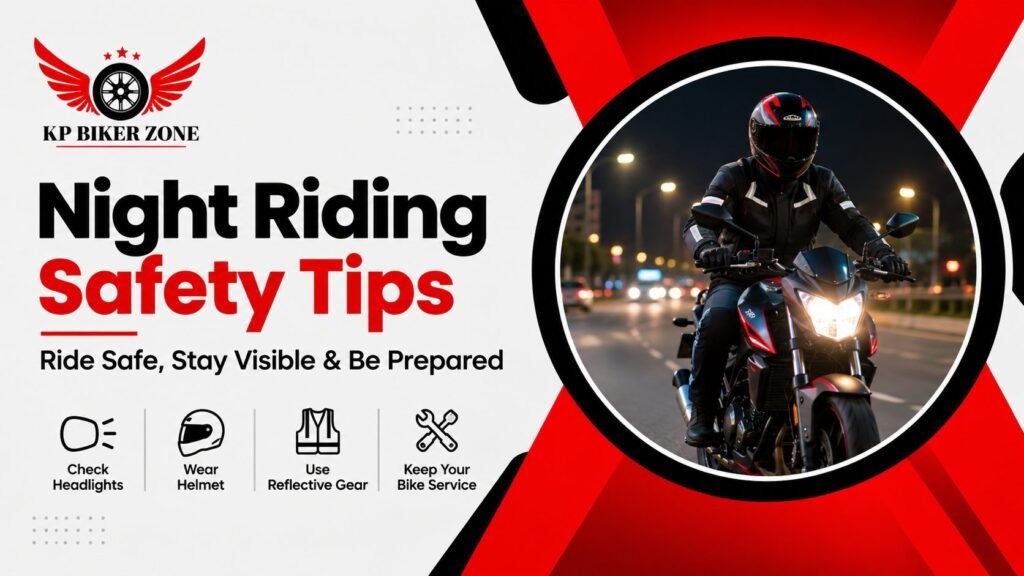
Riding a motorcycle at night requires extra attention because visibility is lower and unexpected road hazards can be difficult to notice. Whether you are travelling home from work, commuting through city traffic or planning a long-distance journey, following proper night riding safety precautions can help reduce risks.
From checking your motorcycle headlights to wearing reflective riding gear, small precautions can make a big difference. In this guide, KP BikerZone explains essential motorcycle night riding safety tips to help you stay visible, alert and prepared on the road.
Why Is Night Riding More Challenging?
During nighttime, your ability to identify road obstacles, pedestrians, potholes and approaching vehicles is reduced. Glare from high-beam headlights can temporarily affect your vision. Fatigue and poorly illuminated roads can also make riding more difficult.
These conditions require better preparation and careful riding.
10 Essential Night Riding Safety Tips
1. Check Your Motorcycle Headlights
Headlights help you see the road and make your motorcycle visible to other road users. Before starting your journey, check both high-beam and low-beam functions.
- Check whether the headlight is working properly.
- Clean the headlight lens regularly.
- Ensure the beam is correctly adjusted.
- Replace damaged or faulty bulbs with compatible parts.
A poorly adjusted headlight can reduce visibility or disturb oncoming drivers. Avoid using high beams unnecessarily.
Check all functions before riding at night.
2. Wear Reflective Riding Gear
Dark clothing can make you difficult to notice at night. Reflective jackets, strips and accessories help other drivers identify your position when illuminated by their headlights.
- Wear reflective riding jackets or vests.
- Choose helmets with reflective elements.
- Use reflective stickers where appropriate.
- Prefer visible clothing when riding on poorly lit roads.
3. Check Brake Lights and Indicators
Your rear brake light and indicators communicate your actions to vehicles behind you. Faulty lights can increase the risk of misunderstandings in traffic.
| Light Component | What to Check |
|---|---|
| Headlight | High and low beam operation |
| Tail Light | Rear visibility |
| Brake Light | Lights up when brakes are applied |
| Indicators | Both left and right signals |
| Number Plate Light | Proper illumination |
4. Maintain a Safe Riding Speed
Do not ride too fast simply because the road appears empty. At night, potholes, animals, pedestrians and unexpected obstacles may be harder to identify.
- Follow the posted speed limits.
- Reduce speed in poorly lit areas.
- Slow down near intersections and pedestrian crossings.
- Avoid sudden acceleration and braking.
5. Avoid Looking Directly at High-Beam Headlights
Glare from approaching vehicles can temporarily affect your vision. Avoid staring directly into bright headlights. Keep your attention on your path and the left edge of your lane while maintaining awareness of traffic.
6. Maintain a Safe Distance
Keeping enough distance from the vehicle ahead gives you more time to react if traffic suddenly slows down.
Increase the gap in rain, darkness and poor visibility.
- Avoid following vehicles too closely.
- Increase your following distance in rain or poor visibility.
- Be careful when following heavy vehicles.
- Avoid riding in another vehicle's blind spot.
7. Always Wear a Certified Helmet
A properly fitted helmet is one of the most important motorcycle safety essentials. Choose a helmet that meets applicable safety standards and has a clear, clean and scratch-free visor.
Not sure which helmet size is right for you? Read our detailed guide on How to Measure Helmet Size to understand how to choose a properly fitting helmet.
- Fasten the chin strap properly.
- Keep the visor clean.
- Replace damaged helmets.
- Avoid riding with a fogged or heavily scratched visor.
- Avoid dark or heavily tinted visors at night.
8. Inspect Tyres and Brakes Before Riding
Tyres and brakes play an important role in motorcycle control. Check their condition before a night journey, especially if you are planning to travel a long distance.
| Component | Inspection |
|---|---|
| Front Tyre | Pressure, tread and visible damage |
| Rear Tyre | Pressure, tread and punctures |
| Front Brake | Brake response and fluid condition |
| Rear Brake | Proper braking response |
| Chain | Lubrication and correct tension |
If you notice tyre damage or a puncture, visit our Bike Puncture Repair Service page for service information.
9. Avoid Mobile Phone Distractions
Using a phone while riding can distract you from traffic and road conditions. Never hold or operate your phone while the motorcycle is moving.
- Set your navigation before starting.
- Keep your phone securely mounted if navigation is needed.
- Stop at a safe location before answering calls.
- Never read or type messages while riding.
10. Carry Basic Emergency Essentials
A small emergency kit can be helpful if your motorcycle develops a problem during nighttime travel.
- Fully charged mobile phone.
- Emergency contact numbers.
- Small flashlight.
- Basic first-aid supplies.
- Suitable puncture repair equipment.
- Reflective warning equipment.
Common Night Riding Mistakes to Avoid
| Common Mistake | Safer Practice |
|---|---|
| Riding with a faulty headlight | Check lights before every journey |
| Wearing dark, non-reflective clothing | Use reflective riding gear |
| Overspeeding on empty roads | Maintain a controlled speed |
| Following vehicles too closely | Maintain adequate distance |
| Ignoring tyre condition | Inspect tyre pressure and tread |
| Riding while tired | Take breaks and rest when needed |
| Using mobile phones while riding | Stop safely before using your phone |
Night Riding Safety Checklist
Before leaving home, use this simple checklist to make sure your motorcycle and riding equipment are ready.
- Headlights and indicators working
- Brake and tail lights working
- Tyre pressure and tread checked
- Front and rear brakes inspected
- Helmet and visor in good condition
- Reflective riding gear ready
- Mobile phone charged
- Rider is alert and well-rested
Why Motorcycle Maintenance Matters for Night Riding
A properly maintained motorcycle helps you ride with greater confidence. Faulty headlights, weak batteries, worn tyres and poor braking performance can create additional risks, especially at night.
Regular servicing helps identify potential problems before they become serious. Pay attention to the electrical system, battery, brakes, tyres and other essential components.
If your motorcycle has a weak battery or does not start, visit our Bike Battery Jumpstart Service page for assistance information.
For regular maintenance, explore our Doorstep Bike Service and check the available Bike Service Prices.
Doorstep Bike Service in Pune & Pimpri-Chinchwad
Planning a night ride? Keep your motorcycle in good condition with professional doorstep bike service from KP BikerZone. We provide bike servicing, maintenance and repair support across Pune and Pimpri-Chinchwad.
Explore our main service pages:
Bike Service Available in Selected Areas
KP BikerZone provides doorstep bike service support in several areas. Explore the following location pages to learn more about service availability.
- Bike Service in Wakad
- Bike Service in Rahatani
- Bike Service in Pimple Saudagar
- Bike Service in Baner
- Bike Service in Aundh
Get Your Bike Checked with KP BikerZone
Planning a night ride? Get your motorcycle inspected before starting your journey.
- Headlight and indicator inspection
- Battery and electrical checks
- Brake inspection and adjustment
- Tyre condition and pressure checks
- General bike maintenance
Book your service through our KP BikerZone Doorstep Bike Service page.
Book Your Bike Inspection Today.
Website: KP BikerZone
WhatsApp: Contact KP BikerZone on WhatsApp
Instagram: Follow KP BikerZone on Instagram
Facebook: Follow KP BikerZone on Facebook
Note: KP BikerZone does not provide electric bike repair services.
Frequently Asked Questions About Night Riding Safety
1. Is riding a bike at night safe?
Night riding can be safer when you follow traffic rules, maintain proper visibility, wear protective gear and ensure your motorcycle is in good condition.
2. What should I check before riding a bike at night?
Check headlights, indicators, brake lights, tyres, brakes, battery condition and helmet visor before starting your journey.
3. Which helmet is best for night riding?
Choose a properly fitted, certified helmet with a clear visor. Avoid dark or tinted visors at night because they reduce visibility. You can also read our helmet size measurement guide.
4. Why is reflective clothing important at night?
Reflective clothing helps other road users notice you when their headlights illuminate your riding gear.
5. Should I use high beam while riding at night?
Use high beam only when appropriate and permitted. Switch to low beam when approaching other vehicles to avoid dazzling their drivers.
6. How can I avoid accidents while riding at night?
Maintain a safe speed, keep sufficient distance, stay alert, use proper lights and avoid distractions.
7. Is it necessary to service my bike before a night ride?
For a regularly maintained bike, a basic pre-ride inspection may be sufficient. If you notice faulty lights, weak brakes, unusual noises or other problems, arrange a professional inspection before travelling.
Final Words
Night riding requires patience, visibility and responsible decision-making. By following these motorcycle night riding safety tips and maintaining your bike regularly, you can reduce avoidable risks and enjoy a safer journey.
KP BikerZone – Your Doorstep Bike Service Partner in Pune & PCMC.