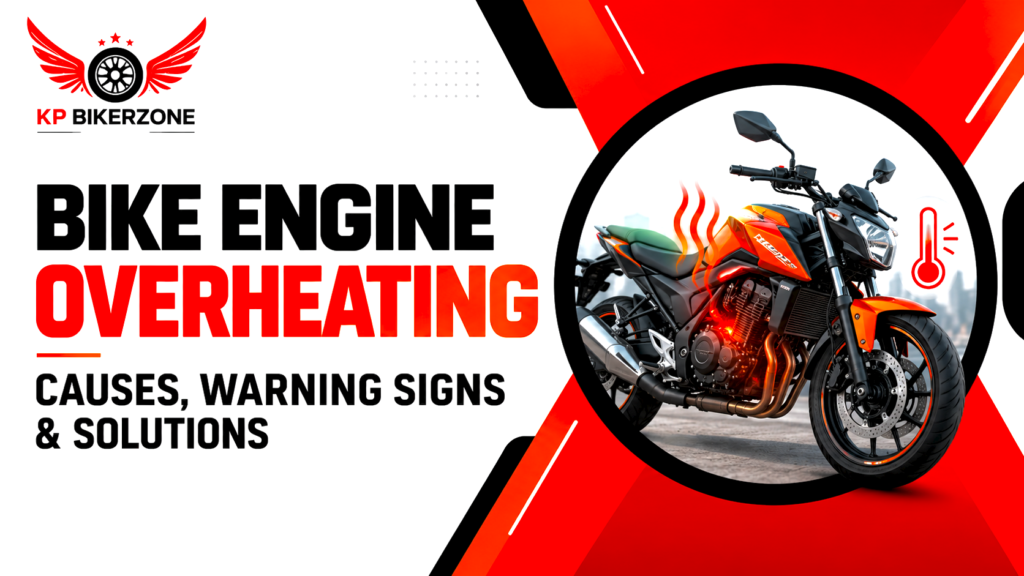
Bike Engine Overheating: Causes, Warning Signs & Solutions
Is your bike engine getting unusually hot while riding? Does your motorcycle lose power in traffic, produce a burning smell, or show a temperature warning? These symptoms may indicate a cooling, lubrication or mechanical problem.
Motorcycle engines naturally generate heat during combustion. However, excessive engine temperature should never be ignored. Prolonged overheating can damage engine oil, pistons, seals and other internal components. This guide explains the common causes, warning signs, prevention methods and when to contact a mechanic.
Quick Answer: Why Does a Bike Engine Overheat?
Common causes include low engine oil, heavy traffic, restricted radiator airflow, cooling-fan failure, low coolant and engine tuning or mechanical problems. The correct diagnosis depends on whether your motorcycle is air-cooled or liquid-cooled.
⚠️ Important Safety Advice
If your motorcycle shows a serious temperature warning, produces steam, loses power or makes unusual knocking sounds, stop at a safe location and switch off the engine.
- Do not continue riding if overheating is severe.
- Never open a hot radiator cap.
- Do not pour cold water over a very hot engine.
- Allow the motorcycle to cool before visual inspection.
- Arrange professional assistance if symptoms continue.
In This Guide
1. Main Causes of Bike Engine Overheating
Engine overheating is a symptom, not a diagnosis. Replacing parts without finding the actual cause can increase repair expenses. These are the main areas that may need inspection.
1. Low or Incorrect Engine Oil
Engine oil lubricates moving parts and helps carry heat away from critical components. Low oil levels, degraded oil or an unsuitable oil specification may increase friction and wear.
What to check: Oil level, visible leakage, service history and unusual engine noise.
Solution: Follow the owner's manual and use the recommended oil grade and quantity.
2. Heavy Traffic and Long Idling
Slow traffic and prolonged idling can reduce airflow around motorcycles that rely heavily on air circulation for cooling.
Warning sign: Temperature rises in traffic and appears to improve when moving, although this alone does not confirm the cause.
Solution: Avoid unnecessary idling and get repeated overheating checked.
3. Radiator or Cooling-Fan Failure
On liquid-cooled motorcycles, a restricted radiator, damaged hose, faulty fan, thermostat issue or water-pump fault can reduce cooling performance.
Warning sign: Temperature warnings, coolant leakage or overheating while stationary.
Solution: Have the cooling system inspected by a qualified mechanic.
4. Low Coolant or Leakage
Liquid-cooled bikes need the correct coolant level and a properly sealed system. Coolant loss may prevent the engine from maintaining its intended operating temperature.
Warning sign: Repeated coolant loss, visible leaks or temperature warnings.
Solution: Inspect only when cool and arrange diagnosis if coolant keeps disappearing.
5. Dirty Cooling Fins
Air-cooled engines use external fins to release heat. Mud, dust and debris can restrict airflow and affect heat transfer.
Solution: Keep the cooling area clean using a suitable method that will not damage the fins.
6. Fuel or Mechanical Problems
Fuel-injection faults, carburettor problems, ignition issues, incorrect valve clearance or internal engine faults can contribute to abnormal heat or poor performance.
Warning sign: Knocking, misfiring, rough idling or loss of acceleration.
Solution: Get the engine and fuel systems professionally diagnosed instead of guessing.
2. Warning Signs You Should Not Ignore
Engine surfaces can become hot during normal riding, so touching the engine is not a reliable way to diagnose overheating. Pay attention to warning lights and changes in motorcycle performance.
| Warning Sign | Possible Cause | Recommended Action |
|---|---|---|
| Temperature warning light | Cooling system problem | Stop safely and follow the owner's manual. |
| Steam or coolant smell | Possible coolant leak | Switch off and let the bike cool. |
| Sudden power loss | Heat-related or mechanical fault | Avoid further riding until inspected. |
| Knocking or metallic noise | Possible lubrication or internal engine problem | Switch off the engine and seek assistance. |
| Repeated coolant loss | Possible leak or cooling-system fault | Arrange a professional inspection. |
3. Air-Cooled vs Liquid-Cooled Motorcycles
Air-Cooled Bikes
These motorcycles mainly use airflow and cooling fins to release engine heat. Traffic, blocked fins, low oil and mechanical faults can affect cooling.
- Check engine oil correctly.
- Keep cooling fins clean.
- Avoid unnecessary prolonged idling.
- Investigate repeated overheating.
Liquid-Cooled Bikes
These motorcycles circulate coolant through the engine and radiator. The fan, radiator, hoses, thermostat and water pump may affect cooling performance.
- Check the coolant reservoir only when cool.
- Look for visible leakage.
- Never open a hot radiator cap.
- Get recurring warnings inspected.
4. Basic Checks Before Calling a Mechanic
If the motorcycle has cooled completely and is not showing serious warning signs, you can carry out a few basic visual checks.
- Check warning indicators: Note temperature, oil-pressure or engine warning lights.
- Check engine oil: Follow the exact checking procedure in your owner's manual.
- Look for leaks: Once cool, visually check for oil or coolant leakage.
- Inspect cooling areas: Look for excessive dirt or visible damage without touching hot parts.
- Review recent maintenance: Check whether the problem started after servicing or a repair.
- Seek diagnosis: If the cause is unclear, avoid trial-and-error repairs.
Do Not Keep Restarting an Overheated Engine
Repeatedly restarting or riding a severely overheated motorcycle can make damage worse. If there is steam, knocking, major power loss or a serious temperature warning, stop and arrange assistance.
5. What Happens If You Ignore Overheating?
Reduced Lubrication
Excessive heat can accelerate oil degradation and increase friction and wear if lubrication becomes inadequate.
Internal Engine Damage
Severe overheating can damage pistons, cylinders and other internal components.
Seal and Gasket Problems
High temperatures may damage seals and gaskets. The actual damage depends on the engine and the severity of overheating.
Higher Repair Expenses
Continuing to ride despite serious symptoms may increase the extent of damage. Early diagnosis can help prevent further harm.
6. How to Prevent Bike Engine Overheating
- Change engine oil at the manufacturer's recommended interval.
- Use the correct oil grade and quantity for your motorcycle.
- Keep radiator airflow or air-cooling fins clear as applicable.
- Maintain the coolant system on liquid-cooled motorcycles.
- Do not ignore temperature or oil-pressure warnings.
- Get unusual engine noises, misfiring or power loss checked early.
- Use suitable parts and fluids recommended for your model.
- Follow your motorcycle's regular maintenance schedule.
For more maintenance information, read our guide: What Is Included in Full Bike Servicing?
7. When Should You Contact a Mechanic?
Arrange professional inspection if your motorcycle repeatedly overheats, coolant keeps disappearing, oil or coolant leaks are visible, the engine makes unusual noises, or a temperature warning returns after cooling.
Depending on the symptoms, a mechanic may inspect the oil, radiator, cooling fan, coolant circulation, hoses, thermostat, water pump, fuel system and internal engine components. Correct diagnosis helps avoid unnecessary part replacement.
Need Bike Service or Repair in Pune & PCMC?
KP BikerZone provides bike service and repair support in Pune and selected Pimpri-Chinchwad areas. Share your location, bike model and symptoms to discuss service availability.
Call KP BikerZone WhatsApp Now Bike Service in PuneRelated Bike Maintenance Guides
Frequently Asked Questions
1. Why does my bike engine get hot in traffic?
Slow traffic and prolonged idling can reduce airflow around some engines. However, repeated overheating may also indicate low oil or a cooling-system or mechanical fault.
2. Is it normal for a motorcycle engine to feel hot?
Yes, engines generate heat during normal operation. Surface warmth alone does not confirm overheating. Warning lights, steam, unusual noises or loss of power deserve attention.
3. Can low engine oil cause overheating?
Low or unsuitable oil can reduce lubrication and increase friction. Check the level using your owner's manual and use the recommended oil.
4. Can I ride a bike that is overheating?
Do not continue riding if the bike shows a serious temperature warning, steam, knocking or significant power loss. Stop safely and follow the manufacturer's guidance.
5. Why does a liquid-cooled bike overheat?
Possible causes include low coolant, leakage, a restricted radiator, fan failure, thermostat problems or a water-pump fault.
6. Does an air-cooled bike use coolant?
A conventional air-cooled bike primarily uses airflow and cooling fins rather than a liquid-coolant radiator system. Check your owner's manual for your particular model.
7. Can overheating damage a piston?
Severe or prolonged overheating can damage pistons, cylinders and other internal components. The engine should be inspected after serious overheating.
8. Should I pour water on a hot engine?
No. Do not pour cold water over a very hot engine. Allow it to cool naturally and follow the manufacturer's instructions.
9. How can I prevent engine overheating?
Follow the recommended service schedule, maintain the correct oil level, keep cooling components clean and investigate warning lights or performance changes promptly.
10. Does KP BikerZone provide bike service in Pune?
KP BikerZone offers bike service and repair support in Pune and selected PCMC areas. Contact the team with your location and motorcycle model to confirm availability.
Final Advice: Do Not Ignore Repeated Overheating
A hot engine does not automatically mean that a motorcycle needs major repairs. The cause may range from riding conditions or routine maintenance to a cooling-system or internal engine fault. Recognise abnormal symptoms early and address them before further damage occurs.
Maintain engine oil correctly, follow the manufacturer's maintenance schedule and stop riding when serious overheating symptoms appear. For bike service and repair support in Pune and Pimpri-Chinchwad, contact KP BikerZone to discuss your motorcycle's condition.
Maintenance note: This guide provides general information. Procedures, service intervals, temperature limits and fluid specifications vary by motorcycle model. Always follow the manufacturer's owner's manual and seek qualified assistance for serious faults.