Bike Chain Maintenance: Cleaning, Lubrication & Common Problems
Bike chain maintenance is important for smooth riding, reliable power delivery and longer chain and sprocket life. Dirt, water, rust, poor lubrication and incorrect chain tension can cause noise, uneven wear and other riding problems.
In this guide, KP BikerZone explains how to clean and lubricate a motorcycle chain, identify common chain problems and know when professional inspection is needed.
1. Why Is Bike Chain Maintenance Important?
A motorcycle chain transfers power from the engine's output sprocket to the rear wheel. When the chain is dirty, dry, excessively loose, too tight or worn, the motorcycle may not run as smoothly as expected.
⚙️ Smoother Power Delivery
A clean, correctly adjusted chain helps transmit power smoothly from the engine to the rear wheel.
🛠️ Reduced Wear
Proper cleaning and lubrication help reduce friction and premature wear on chain components.
🔍 Early Problem Detection
Regular inspections can reveal rust, damaged links, unusual slack or worn sprocket teeth.
💰 Better Maintenance Planning
Routine checks help identify problems before they lead to more extensive repairs.
2. When Should You Clean and Lubricate Your Bike Chain?
There is no single interval that suits every motorcycle. Follow the maintenance schedule in your owner's manual and check the chain more frequently after riding in rain, dust, mud or other harsh conditions.
- After riding through heavy rain or muddy roads, inspect and clean the chain as needed.
- If the chain looks dry or dirty, check whether cleaning and lubrication are required.
- If you hear unusual chain noise, inspect the chain and sprockets before continuing normal riding.
- Check chain slack at the interval specified by the manufacturer.
- After adjustment, verify that the rear wheel is aligned according to the service manual.
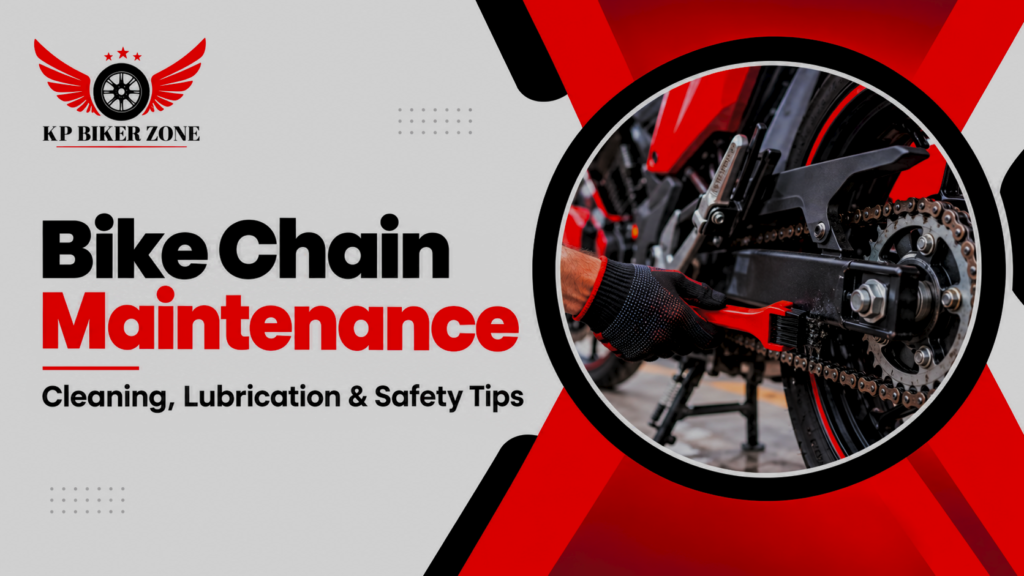
3. How to Clean a Bike Chain Properly
Cleaning removes dirt and old residue that can increase wear. Always follow your motorcycle and chain manufacturer's cleaning instructions, especially if your bike has an O-ring, X-ring or another sealed chain.
Step 1: Park the Bike Safely
Switch off the engine, remove the key and park the motorcycle on stable, level ground. Let hot components cool before starting maintenance.
Step 2: Choose a Suitable Chain Cleaner
Use a cleaner approved for your chain type. Avoid harsh chemicals, petrol or other solvents unless the manufacturer specifically permits them, because unsuitable products can damage seals or other components.
Step 3: Brush Gently
Use a suitable soft chain brush to remove dirt without damaging the chain seals. Do not use a metal brush or apply excessive force.
Step 4: Wipe and Dry
Wipe off loosened dirt and cleaner using a suitable cloth. Allow the chain to dry as directed by the cleaner manufacturer before applying lubricant.
Step 5: Inspect Before Lubricating
Look for rust, stiff links, missing seals, damaged rollers, uneven tension and visibly worn sprocket teeth. A badly worn or damaged chain should be inspected by a qualified mechanic.
4. How to Lubricate a Motorcycle Chain
Correct lubrication helps reduce friction and protects the chain from excessive wear and corrosion. Use a motorcycle chain lubricant suitable for your chain type and follow the product instructions.
- Make sure the chain is clean and dry as required by the lubricant instructions.
- Apply a suitable amount of lubricant to the chain as directed by the product manufacturer.
- Keep lubricant away from tyres, brake discs, brake pads and other braking surfaces.
- Allow the lubricant to settle for the recommended time before riding.
- Wipe off excess lubricant if instructed by the product manufacturer.
5. Correct Bike Chain Tension and Slack
Chain slack is the amount of movement specified for the chain by the motorcycle manufacturer. The correct value differs between models, and some motorcycles require a specific suspension position when measuring it.
What Happens If the Chain Is Too Loose?
- The chain may slap against nearby components.
- Power delivery may feel rough or inconsistent.
- In severe cases, the chain may come off the sprocket.
What Happens If the Chain Is Too Tight?
- Excessive load can be placed on chain, sprocket and drivetrain components.
- Suspension movement may increase the load on an incorrectly adjusted chain.
- Premature wear or component damage may occur.
6. Common Bike Chain Problems and Their Solutions
| Problem | Possible Cause | Recommended Action |
|---|---|---|
| Chain noise | Low lubrication, incorrect slack, dirt or worn components | Inspect, clean and lubricate as appropriate; check tension and wear. |
| Rust on chain | Moisture, exposure to rain or inadequate protection | Clean and inspect. Replace the chain if corrosion has caused damage. |
| Chain feels tight in some positions | Uneven wear, damaged links or other drivetrain issues | Have the chain and sprockets inspected by a mechanic. |
| Chain repeatedly becomes loose | Wear, incorrect adjustment or wheel-alignment problems | Check wear limits, adjustment and wheel alignment. |
| Jerking while accelerating | Possible chain or sprocket wear, or another drivetrain or engine issue | Arrange an inspection rather than assuming the chain is the only cause. |
| Damaged or stiff links | Wear, corrosion, damage or unsuitable maintenance products | Stop riding if damage is significant and have the chain assessed for replacement. |
A chain problem can sometimes feel similar to an engine or clutch issue. If the cause is unclear, a proper inspection can help avoid replacing the wrong component.
7. Important Motorcycle Chain Safety Tips
- Follow the motorcycle manufacturer's maintenance schedule and chain specifications.
- Use cleaner and lubricant suitable for the fitted chain type.
- Never clean or lubricate a chain with the engine running.
- Keep lubricant off the tyres and braking system.
- Inspect sprocket teeth and chain links for signs of wear or damage.
- Replace worn chain and sprocket components according to the manufacturer's guidance.
- If the chain is severely loose, damaged or at risk of coming off, do not continue riding; arrange professional assistance.
8. When Should You Get Professional Bike Service?
Routine chain cleaning may be manageable at home, but adjustment, alignment, wear assessment and replacement require the correct tools and model-specific specifications.
Consider professional inspection if you notice:
- Repeated chain slack problems
- Rust, stiff links or visible damage
- Worn or hooked sprocket teeth
- Unusual noise, vibration or jerking from the drivetrain
- Uncertainty about correct chain tension or wheel alignment
KP BikerZone offers doorstep bike service and repair in Pune and Pimpri-Chinchwad (PCMC). Contact the team to discuss your motorcycle's chain inspection or maintenance requirements.
Need Bike Chain Inspection in Pune or PCMC?
Contact KP BikerZone for doorstep bike service and repair. Share your bike model and location to discuss service availability.
Related Bike Maintenance Guides
Explore more bike maintenance information from KP BikerZone:
Frequently Asked Questions
How often should I clean my bike chain?
Follow your motorcycle owner's manual and inspect the chain regularly. Cleaning may be needed more often after rain, muddy roads or dusty rides.
Can I use engine oil to lubricate my motorcycle chain?
Use a lubricant recommended for your motorcycle's chain type. Ordinary engine oil may not provide the performance or staying power of a suitable motorcycle chain lubricant. Follow the manufacturer's guidance.
Why does my bike chain make noise?
Possible causes include insufficient lubrication, dirt, incorrect slack, stiff links or worn chain and sprocket components. Inspection is needed to identify the actual cause.
How do I know if my bike chain needs replacement?
Excessive wear, damaged or stiff links, corrosion, adjustment beyond the specified limit and worn sprocket teeth may indicate that replacement is necessary. Follow the manufacturer's wear limits.
Can I adjust my bike chain at home?
Some owners can perform this task with the correct tools and model-specific instructions. Incorrect adjustment or wheel alignment can cause damage, so seek professional help if you are unsure.
Does KP BikerZone provide doorstep bike service in Pune?
KP BikerZone provides doorstep bike service and repair in Pune and PCMC. Contact the team with your location and bike model to confirm service availability.
Conclusion
Regular bike chain maintenance helps keep your motorcycle drivetrain clean, lubricated and correctly adjusted. Inspect the chain for wear, use suitable maintenance products and follow the manufacturer's tension specifications. If you noti