How Many Punctures Can Be Repaired on a Tubeless Bike Tyre?
Learn about tubeless bike tyre puncture repair, safe repair limits, tyre replacement signs and practical maintenance tips for motorcycle and scooter riders.
Tubeless bike tyre puncture repair depends on the puncture location, size, tyre condition and manufacturer's instructions. There is no universal number of punctures that can safely be repaired on every motorcycle or scooter tyre.
A small puncture in the permitted tread area may be repairable, but sidewall damage, large cuts or closely spaced repairs can make replacement necessary. This guide from KP BikerZone explains how to recognise damage, understand repair limitations and choose a safer next step.
1. Tubeless Bike Tyre Puncture Repair: How Many Punctures Are Safe?
Tubeless bike tyre puncture repair should follow the tyre manufacturer's safety guidelines. Inspect the puncture location, tyre condition and previous repairs before deciding whether repair or replacement is appropriate.
There is no fixed puncture count that applies to every tubeless bike tyre. Each case needs to be assessed against the tyre manufacturer's repair criteria. A tyre with one serious cut may be unsafe, while another tyre with a small, eligible tread puncture may be repairable.
- Location: A puncture in the permitted tread area may be repairable. Sidewall damage generally requires replacement.
- Size: A hole exceeding the permitted repair size may not be suitable for repair.
- Spacing: Closely spaced or overlapping repairs can weaken the same section.
- Previous repairs: Existing repairs must be inspected before another is considered.
- Internal damage: Riding on a flat or underinflated tyre can damage its internal structure.
- Tyre wear: Cracks, ageing and excessive wear may make replacement the safer option.
Safety first: Do not decide based only on the number of punctures. Follow the manufacturer's instructions and have the tyre inspected by a qualified professional.
For related guidance, read our article on how to fix a bike puncture at home. Do not attempt a repair that exceeds your skills or the manufacturer's requirements.
2. Types of Tubeless Bike Tyre Punctures
Centre tread puncture
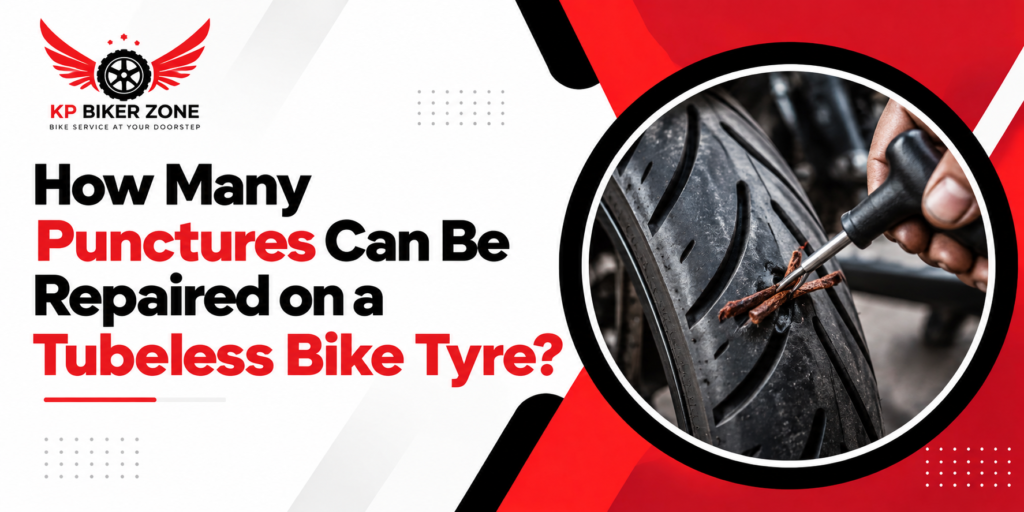
A small nail or screw hole in the main tread area may be repairable if it meets the manufacturer's size and location requirements and the tyre has no internal damage.
Shoulder area damage
The shoulder is the curved area between the tread and sidewall. Damage in this area may fall outside the permitted repair zone. Replacement may be recommended according to the tyre manufacturer's instructions.
Sidewall puncture or cut
The sidewall flexes while riding and helps support the tyre. A puncture, cut or bulge in this area can compromise structural strength. Replacement is generally recommended instead of ordinary puncture repair.
Valve or rim leakage
Not every air leak is caused by a puncture. A faulty valve, rim sealing problem or previous repair may also cause pressure loss. The source of leakage should be identified before deciding on a repair.
3. When Can a Tubeless Bike Tyre Be Repaired?
A puncture may be repairable when the damage is within the approved tread area, meets the manufacturer's size limits and has not caused structural damage. The correct method depends on the tyre model and its repair instructions.
Depending on the tyre and approved procedure, the tyre may need to be removed from the rim for internal inspection. An external plug alone should not automatically be considered a permanent repair.
What should be checked before repair?
- The puncture's exact location, size and direction.
- The inner liner and surrounding rubber for damage.
- Previous repairs and the distance between them.
- Remaining tread depth and overall tyre condition.
- The manufacturer's permitted repair limits.
- Whether the tyre was ridden while flat or severely underinflated.
If the tyre does not meet the safety requirements, replacement is the better option. Do not choose a repair solely because it costs less.
4. When Should You Replace a Tubeless Bike Tyre?
For additional tyre safety guidance, read the official Michelin motorcycle tyre repair guide.
Tyre replacement may be necessary when damage cannot be repaired safely. Look for these warning signs:
- A sidewall puncture or cut in a non-repairable area.
- A large hole, tear or exposed internal cords.
- A visible bulge or deformation.
- Overlapping repairs or damage beyond permitted limits.
- Deep cracks, excessive tread wear or significant ageing.
- Possible internal damage after riding on a flat tyre.
- Repeated air loss after a previous repair.
Never ignore a tyre bulge. Stop riding when safe and arrange professional inspection. A damaged tyre can affect handling, grip and stability.
5. Are Multiple Punctures Dangerous?
Multiple punctures do not automatically mean that every tyre must be replaced. However, each puncture and previous repair must be assessed. Closely spaced holes may weaken the same area, while repeated air loss may indicate a deeper problem.
If a tyre continues losing air after repair, possible causes include another puncture, valve leakage, a rim sealing problem or internal damage. A professional leak check can help identify the cause.
Repeated repairs are not a substitute for replacing a tyre that is worn out or structurally damaged.
6. Bike Tyre Maintenance Tips
Check tyre pressure regularly
Check pressure when the tyres are cold and follow the values recommended by your motorcycle manufacturer. Incorrect pressure can affect handling, tyre wear and safety.
Inspect the tread and sidewalls
Look for embedded nails, screws, cracks, cuts and uneven wear. Avoid pulling an embedded object out on the roadside if doing so could cause rapid air loss.
Avoid riding on a flat tyre
Riding with low pressure can damage the tyre internally. Stop in a safe location and arrange suitable assistance rather than continuing to ride.
Follow a regular maintenance schedule
Use our complete bike service checklist for riders to learn about routine motorcycle inspection points.
Tyre checks are only one part of motorcycle maintenance. Follow your bike manufacturer's schedule for brakes, chain, engine oil and other components.
7. Tubeless Tyre Repair vs Replacement
| Tyre condition | Recommended action |
|---|---|
| Small puncture in permitted tread area | Inspection; repair may be possible |
| Sidewall puncture or cut | Replacement is generally recommended |
| Large cut or visible bulge | Stop riding and arrange replacement |
| Closely spaced previous repairs | Check manufacturer limits |
| Tyre ridden while flat | Internal inspection before deciding |
| Excessively worn tyre | Replace when service limits are reached |
This comparison is a general guide. The final decision should follow the tyre manufacturer's instructions and a professional inspection.
8. Doorstep Bike Service in Pune and PCMC
KP BikerZone provides doorstep bike service and repair support across Pune and Pimpri-Chinchwad, subject to location and service availability.
For convenient servicing at your location, read our bike service at home guide to understand how doorstep bike maintenance works.
Visit our bike service in Pune and PCMC page for more information about local service options.
Need Bike Service Assistance?
Contact KP BikerZone to discuss doorstep bike service and repair availability in Pune and PCMC.
Call KP BikerZone: 8263805949 Read Our Doorstep Bike Service Guide9. Frequently Asked Questions
How many punctures can be repaired on a tubeless bike tyre?
There is no universal number. The safe repair limit depends on puncture location, size, spacing, tyre condition and manufacturer instructions.
Can a tubeless bike tyre be repaired more than once?
It may be possible if each repair meets the manufacturer's criteria and the tyre remains structurally sound. A qualified professional should inspect existing repairs.
Can a sidewall puncture be repaired?
Sidewall damage is generally unsuitable for ordinary puncture repair. Replacement is usually recommended.
Is it safe to ride with a slow puncture?
A slow leak is still a safety concern. Stop safely and arrange an inspection rather than continuing to ride with low pressure.
Why does a tyre lose air after puncture repair?
Possible causes include another puncture, an incomplete repair, valve leakage, a rim sealing problem or internal tyre damage. A professional leak check can identify the cause.
Does KP BikerZone provide doorstep bike service?
KP BikerZone provides doorstep bike service and repair support across Pune and PCMC, subject to local availability. Contact the team to confirm service for your location.
Safety Disclaimer
This article provides general educational information and does not replace a professional tyre inspection. Follow your tyre manufacturer's repair instructions and consult a qualified tyre professional before using a damaged tyre.