Advantages of a V-Twin Engine in Bikes
By KP Biker Zone | Updated 2026
Why Are V-Twin Engines Popular?
The main advantages of a V-Twin engine in bikes include strong low and mid-range torque, a distinctive engine sound, unique riding character and comfortable highway cruising. The exact experience depends on the engine design, motorcycle type and manufacturer tuning.
A motorcycle engine does much more than simply produce power. Its cylinder arrangement can influence how a bike accelerates, sounds, feels and performs on different roads. Among the different motorcycle engine layouts, the V-Twin engine has a special place because of its distinctive design and riding character.
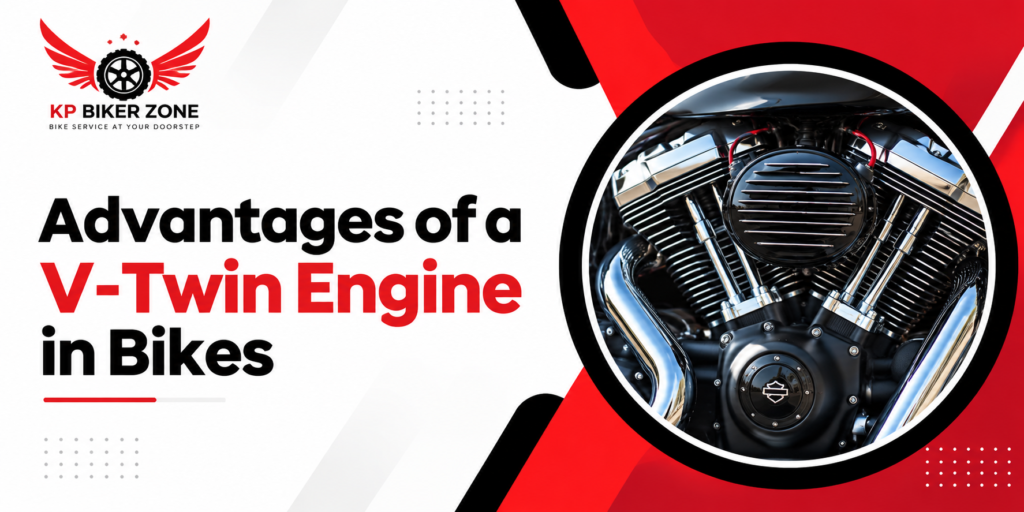
A V-Twin uses two cylinders positioned at an angle to form a V shape. This configuration has been used in motorcycles for many years and is particularly associated with cruiser and touring motorcycles, although modern V-Twin designs can also be found in other motorcycle categories.
In this guide, KP Biker Zone explains the important advantages of a V-Twin engine in bikes, its performance characteristics, maintenance requirements and the type of riding for which this engine configuration can be suitable.
What Is a V-Twin Engine?
A V-Twin engine is a two-cylinder internal combustion engine in which the cylinders are arranged at an angle to each other, forming a V. The cylinder angle can vary between different motorcycle engines.
The V-shaped arrangement can influence engine packaging, power delivery, vibration and sound. The final characteristics depend on factors such as crankshaft design, firing order, cylinder angle, displacement and engine tuning.
V-Twin engines are available in different forms, from traditional air-cooled designs to modern liquid-cooled engines with advanced electronic engine management.
1. Strong Low and Mid-Range Torque
Strong Torque Delivery
One of the biggest advantages of a V-Twin engine in bikes is the strong torque characteristics offered by many V-Twin designs. Useful torque at lower and medium engine speeds can make acceleration feel responsive.
This can be useful in city traffic, during overtaking and when riding on roads with inclines. The rider may also need fewer gear changes when the engine has strong torque available at lower RPM.
For smooth engine operation, using the correct engine oil and following the manufacturer's service schedule is important. You can also read our guide to the best engine oil for bikes .
2. Distinctive Engine Sound
A Sound Riders Recognize
A V-Twin engine can produce a distinctive sound because of its cylinder arrangement, crankshaft design, firing sequence and exhaust system.
The exact sound varies between motorcycles, but the engine note is an important part of the riding character that attracts many motorcycle enthusiasts to V-Twin bikes.
The attraction of a V-Twin is not only about power. It is also about the combination of torque, sound, feel and riding character.
3. Unique Riding Experience
Power With Character
The combination of engine pulses, torque delivery and sound gives many V-Twin motorcycles a riding character that feels different from other engine configurations.
This is one reason the layout remains popular among riders who enjoy relaxed cruising, touring and a strong mechanical feel from their motorcycle.
4. Comfortable Highway Cruising
Relaxed Long-Distance Performance
Many V-Twin motorcycles are designed around strong torque and relaxed power delivery. This can make them well suited to highway cruising and long-distance touring.
A motorcycle's highway performance also depends on engine displacement, gearing, motorcycle weight, aerodynamics and manufacturer tuning.
For example, current V-Twin motorcycles from manufacturers such as Harley-Davidson demonstrate how the configuration can be tuned for strong low-RPM torque and highway cruising. See an official V-Twin motorcycle example .
5. Efficient Engine Packaging
V-Shaped Cylinder Arrangement
The V-shaped layout gives motorcycle manufacturers different options when positioning the engine within the frame.
Depending on the cylinder angle and engine design, manufacturers can balance engine dimensions, frame layout, weight distribution and rider ergonomics according to the motorcycle's purpose.
6. Different Cooling Technologies
Air-Cooled and Liquid-Cooled Designs
V-Twin engines can use different cooling technologies. Traditional designs may use air cooling, while many modern motorcycles use liquid cooling for more controlled temperature management.
Good temperature management is important for consistent engine performance. Cooling components should therefore be inspected as part of regular motorcycle maintenance.
7. Characteristic Engine Vibration
Mechanical Feel
Some V-Twin motorcycles have a characteristic level of engine vibration. The amount depends on cylinder angle, crankshaft design, firing order and the balancing technology used by the manufacturer.
Modern V-Twin engines can use balancing systems and improved engine mounting to reduce unwanted vibration while maintaining the desired engine character.
8. Popular Choice for Cruiser and Touring Bikes
Designed Around Relaxed Riding
V-Twin engines are strongly associated with cruiser and touring motorcycles. Their torque characteristics can work well with relaxed riding positions, steady highway speeds and long-distance travel.
That does not mean every V-Twin is designed only for cruising. Modern V-Twin technology is also used in motorcycles designed for different types of performance and riding conditions.
9. Maintenance Is Important
Regular Service Protects Performance
Like every motorcycle engine, a V-Twin requires regular maintenance. Engine oil, air filters, spark plugs, cooling components and other important parts should be checked according to the manufacturer's service schedule.
Unusual engine noise, overheating, difficult starting, poor acceleration or sudden changes in fuel efficiency should not be ignored.
For a detailed maintenance reference, check our Complete Bike Service Checklist .
10. Fuel Efficiency Depends on Riding and Maintenance
Ride Smoothly, Maintain Regularly
Fuel efficiency depends on engine capacity, motorcycle weight, traffic, riding style, tyre pressure and maintenance.
A rider can often improve fuel economy through smooth acceleration, correct gear selection, proper tyre pressure and regular motorcycle servicing.
For practical mileage information, read our guide on how to improve bike mileage .
V-Twin Engine vs Other Motorcycle Engine Types
Every motorcycle engine configuration has its own strengths. A V-Twin is generally appreciated for torque, sound and riding character, while other configurations may focus more strongly on smoothness, compactness or high-RPM performance.
| Engine Type | Common Character |
|---|---|
| V-Twin | Strong torque and distinctive riding feel |
| Parallel Twin | Balanced performance and compact packaging |
| Inline Four | Smooth high-RPM performance |
| Single Cylinder | Simple design and useful low-speed performance |
How to Maintain a V-Twin Motorcycle
Proper maintenance is one of the easiest ways to protect motorcycle performance. Always follow the service interval recommended by the manufacturer and use the correct specifications for engine oil and replacement parts.
- Replace engine oil at the recommended interval.
- Inspect and clean or replace the air filter when required.
- Check spark plugs according to the service schedule.
- Inspect the cooling system and look for signs of overheating.
- Check the battery and charging system.
- Inspect clutch operation and adjustment.
- Clean, lubricate and adjust the motorcycle chain when required.
- Check brake pads, discs, tyres and tyre pressure.
If your motorcycle uses a chain drive, regular cleaning and lubrication are especially important. Read our Motorcycle Chain Maintenance Guide for more information.
When Should You Service a V-Twin Bike?
Regular servicing should be based on the manufacturer's recommended schedule rather than waiting for a major problem.
However, some symptoms deserve attention even before the next scheduled service. These include unusual engine sounds, overheating, difficult starting, poor acceleration, abnormal vibration or a noticeable change in fuel efficiency.
If you experience a starting problem, you can also read our guide: Why Is My Bike Not Starting?
Frequently Asked Questions About V-Twin Engines
What are the advantages of a V-Twin engine in bikes?
The main advantages of a V-Twin engine in bikes include strong low and mid-range torque, distinctive sound, unique riding character and comfortable highway cruising.
Is a V-Twin engine good for everyday riding?
Yes. A V-Twin motorcycle can be suitable for everyday riding. The best choice depends on engine size, motorcycle weight, riding position, traffic conditions and the rider's requirements.
Is a V-Twin engine good for long-distance riding?
Many V-Twin motorcycles are suitable for long-distance riding because their torque characteristics can provide relaxed acceleration and comfortable highway cruising.
Does a V-Twin engine give good mileage?
Mileage depends on engine capacity, motorcycle weight, riding style, traffic conditions and maintenance. Smooth riding and regular servicing can help improve fuel efficiency.
Why does a V-Twin engine sound different?
The cylinder arrangement, crankshaft design, firing sequence and exhaust system all influence the sound of a V-Twin motorcycle. This is why different V-Twin motorcycles can have different engine notes.
Are V-Twin engines expensive to maintain?
Maintenance costs depend on the motorc