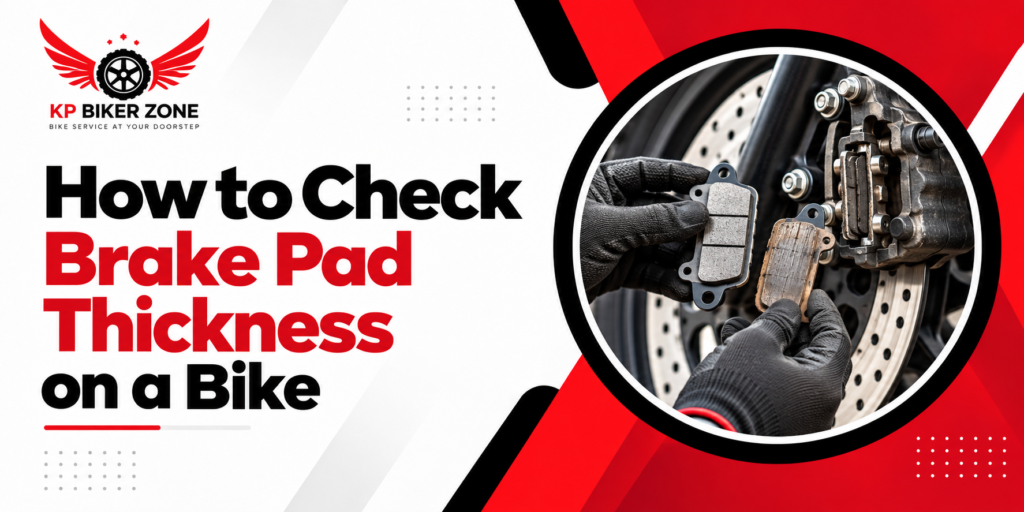
How to Check Brake Pad Thickness on a Bike
By KP Biker Zone | Updated 2026
How Can You Check Brake Pad Thickness?
To check brake pad thickness on a bike, inspect the brake pad through the caliper opening and look at the remaining friction material. Compare the visible pad material with the motorcycle manufacturer's recommended replacement limit. If the pad is heavily worn, uneven, damaged or braking performance has changed, get the brake system inspected before continuing to ride.
How to Check Brake Pad Thickness on a Bike is an important skill for every motorcycle rider. Brake pads are directly involved in slowing and stopping the motorcycle, so their condition should never be ignored.
Brake pads gradually lose friction material as you use the motorcycle. City traffic, frequent braking, riding on slopes, heavy loads and riding conditions can all influence how quickly brake pads wear.
This guide explains How to Check Brake Pad Thickness on a Bike using a simple inspection process while also covering common warning signs, maintenance tips and situations where professional brake service may be needed.
What Are Brake Pads on a Bike?
Brake pads are friction components used in disc brake systems. When you apply the brake, the brake caliper presses the pads against the brake disc or rotor. The resulting friction slows down the wheel and helps bring the motorcycle to a stop.
Because brake pads continuously experience friction and heat, their friction material gradually becomes thinner. Once the pads approach the manufacturer's specified wear limit, they should be inspected and replaced when required.
1. Park the Bike Safely Before Inspection
Start With a Safe Inspection Position
Park the motorcycle on a stable and level surface. Switch off the engine and allow the brakes to cool if the motorcycle has recently been ridden.
Do not inspect or touch brake components immediately after heavy riding because brake discs and nearby components can become very hot.
2. Locate the Brake Caliper and Brake Pads
Find the Brake Pad Area
On a disc-brake motorcycle, the brake caliper is positioned around the brake disc. The brake pads sit inside the caliper and press against the disc when the brake is applied.
Look through the inspection opening of the caliper to locate the friction material. Depending on the motorcycle design, the viewing angle can be different.
3. Look at the Remaining Friction Material
Check the Pad Material, Not Just the Metal Backing
The important part to inspect is the friction material attached to the brake pad backing plate. This material gradually becomes thinner as the brakes are used.
Do not confuse the metal backing plate with the friction material. The friction material is the part that contacts the brake disc.
Brake pad inspection is not only about looking for a thin pad. Uneven wear, damaged friction material, contamination and changes in braking performance also deserve attention.
4. Check Both Brake Pads for Uneven Wear
Compare the Wear Pattern
Both pads should be inspected whenever possible. One pad may sometimes wear differently from the other because of caliper movement, brake component condition or other mechanical factors.
If one pad appears significantly thinner than the other, the brake system should be inspected instead of simply replacing the visibly worn pad.
5. Check the Brake Pad Thickness
Compare the Thickness With the Manufacturer's Limit
The correct replacement thickness is not identical for every motorcycle. Different manufacturers and models can have different specifications.
Use the owner's manual or official service information for the exact minimum thickness specified for your motorcycle. If the remaining friction material is close to or below that limit, the pads should be replaced according to the manufacturer's recommendation.
Important Brake Safety Note
Do not rely only on a general thickness number found online. Brake pad specifications vary between motorcycle models. For an exact replacement limit, always check the owner's manual or manufacturer service information.
6. Look for Uneven or Damaged Brake Pads
Wear Should Not Be Ignored
A brake pad may have enough visible material but still require attention if the friction material is cracked, contaminated, damaged or wearing unevenly.
If you notice unusual damage, oil contamination, deep grooves or an abnormal wear pattern, have the brake system inspected by a qualified mechanic.
7. Inspect the Brake Disc Condition
Check the Rotor Along With the Pads
Brake pad inspection should not be done in isolation. The brake disc or rotor should also be checked for unusual scoring, deep grooves, damage or other visible problems.
A damaged or heavily worn disc can affect braking performance and may also cause abnormal brake pad wear.
8. Pay Attention to Brake Noise
Squeaking and Grinding Can Be Warning Signs
Brake noise can have several causes, including brake pad wear, dust, contamination, surface condition or other brake-system issues.
A persistent grinding sound should not be ignored because continued riding may increase the risk of damage to the braking components.
9. Notice Changes in Braking Performance
How Does the Brake Feel?
Pay attention to changes in braking response. Reduced stopping performance, unusual vibration, a soft brake lever or other unexpected changes should be investigated.
Brake performance depends on more than pad thickness. Brake fluid, brake discs, calipers, cables or hydraulic components can also affect how the brake system operates.
10. Replace Worn Brake Pads on Time
Do Not Wait Until the Pads Are Completely Worn
Brake pads are safety-critical components. If inspection shows that the friction material has reached the manufacturer's replacement limit, the pads should be replaced.
Replacing brake pads before serious wear helps maintain proper braking performance and reduces the chance of the brake system developing additional problems.
Signs Your Bike Brake Pads May Need Attention
Knowing the warning signs can help you identify brake problems before they become more serious.
- Brake pads appear very thin during inspection.
- Braking performance feels weaker than usual.
- Persistent squeaking or unusual brake noise is present.
- Grinding sounds occur while braking.
- The brake lever feels different from normal.
- The motorcycle vibrates unusually while braking.
- Brake pad wear appears uneven.
- The brake disc has unusual grooves or visible damage.
- The brake system shows signs of contamination.
Different Types of Bike Brake Pads
Motorcycles can use different brake pad compounds. The choice depends on the motorcycle model, braking system, riding conditions and manufacturer's specifications.
| Brake Pad Type | General Characteristics |
|---|---|
| Sintered | Often designed for strong performance and demanding riding conditions |
| Semi-Metallic | Balanced performance and everyday usability |
| Organic | Often associated with smooth and quieter braking characteristics |
The best brake pad type for your motorcycle should be selected according to the manufacturer's recommendation rather than choosing a pad only because it has a particular material type.
How Often Should You Check Bike Brake Pads?
There is no single inspection interval that is perfect for every rider. Brake wear depends on traffic, riding style, motorcycle weight, road conditions, braking frequency and brake-pad material.
A good practice is to visually inspect the brakes during regular motorcycle maintenance and before longer rides. Riders who frequently ride in heavy traffic or hilly areas may need to pay closer attention to brake wear.
How to Maintain Bike Brake Pads
- Avoid unnecessary hard braking whenever road conditions allow.
- Keep brake components clean and free from oil contamination.
- Inspect brake pads during regular motorcycle servicing.
- Check brake discs for unusual grooves or damage.
- Follow the manufacturer's recommended brake maintenance schedule.
- Use brake pads recommended for your motorcycle model.
- Do not ignore changes in braking performance.
- Have unusual brake noise or vibration inspected promptly.
For a broader motorcycle maintenance reference, see our Complete Bike Service Checklist .
Motorcycle Brake System Reference
Brake systems contain several components that work together to provide controlled stopping performance. For additional technical information about motorcycle braking systems, you can refer to Brembo's motorcycle braking information .
Brake Pad Wear vs Other Brake Problems
Not every braking problem is caused by worn brake pads. Understanding the difference can help you avoid replacing the wrong component.
| Symptom | Possible Area to Inspect |
|---|---|
| Thin brake pad material | Brake pads |
| Deep disc grooves | Brake disc or rotor |
| Soft brake lever | Brake fluid or hydraulic system |
| Unusual vibration | Disc, wheel or brake components |
| Persistent squeaking | Pad condition, contamination or brake-system condition |
When Should You Visit a Bike Mechanic?
If you are unable to clearly inspect the brake pad thickness, or if you notice unusual braking behaviour, it is safer to have the motorcycle checked by a qualified mechanic.
Professional inspection becomes especially important when there is grinding, severe vibration, reduced stopping power, brake fluid leakage, uneven pad wear or visible damage to the brake disc.
Related Bike Maintenance Guides
- Complete Bike Service Checklist
- Motorcycle Chain Maintenance Guide
- How to Improve Bike Mileage
- Best Engine Oil for Bikes
- Why Is My Bike Not Starting?
Frequently Asked Questions About Bike Brake Pads
How do I check brake pad thickness on a bike?
To check brake pad thickness on a bike, inspect the brake pad through the caliper opening and look at the remaining friction material. Compare it with the minimum thickness specified by your motorcycle's manufacturer. If the pad is close to or below the recommended limit, have it replaced or professionally inspected.
How do I know if my bike brake pads are worn?
Worn brake pads may have very little friction material remaining. Other warning signs can include reduced braking performance, persistent unusual noise, uneven wear or changes in brake feel. A visual inspection can help identify wear, but professional inspection is recommended if you are unsure.
What thickness should bike brake pads be replaced at?
The exact replacement limit depends on the motorcycle and brake-pad manufacturer. Instead of using one universal number, check your motorcycle owner's manual or official service information for the specified minimum thickness.
Can I check my bike brake pads without removing the wheel?
On many motorcycles, the brake pads can be visually inspected through the brake caliper without removing the wheel. However, a